
Shade Sail Designer
Planning a shade sail? Place its corners in your garden, set the height and fixing of each point and see the sail take shape: its size, the fabric area, the posts and brackets it needs, and where its shade falls through the day with the real Dubai sun. Add a second or third sail to overlap them, as many of our gardens do. When you're happy with it, send the design to our team for a price.
Happy with your design? Send it to our team for a price, and we'll confirm it on a site visit.
What the designer shows
A plan of a 12 by 9 metre garden with the house along one side and 2 metre boundary walls on the other three. You design one to three shade sails, which can overlap. For each sail you place its fixing points (three to six) by dragging them, and set each point's height and fixing: a bracket on the house or boundary wall, a steel post bolted to a wall (when a wall is too low for the height needed), or a steel post set in a concrete foundation. You also set the month, the time and which way the garden faces. You can also add walls of your own, such as a garden wall, a garage or an outbuilding, set their length, position and height, and fix sails to them. The designer draws each sail with the curved edges a tensioned sail is cut with, and shows the edge lengths, the fabric area, the fixings needed, and where the combined shade falls on the ground with the real Dubai sun.
- Twist and slope: a sail needs its fixing points at different heights. On a four-corner sail, two opposite corners high and the other two low twists the fabric into a saddle shape, which keeps it tight and lets rain run off; a flat sail sags, flaps and holds water.
- Overlapping sails at different heights cover a large garden better than one very large sail, look layered, and each stays tight. Very long edges (over about 10 metres) or very large sails (over about 60 square metres) are better split, and very sharp corners are hard to tension.
- Fixings: a bracket can only go as high as the wall it is fixed to; a boundary wall is usually about 2 metres, so a higher corner needs a post bolted to the wall or a post in a concrete foundation.
- Shade: in the afternoon the sun is low, so the shade of a high sail lands well to the side of it. Placing sails towards the sun side of the seating area, or lowering that edge, keeps the seating in shade.
When the design is ready, it can be sent to The Shading Company on WhatsApp or through the enquiry form, with each sail's fixing points, fixings, heights, edge lengths and area filled in. Every sail is measured and designed on site before it is made.
How to use the designer
- Pick a starting shape: a triangle, four corners or five.
- Drag the corners to where the sail will be fixed: the house wall, a boundary wall or the open garden.
- Tap a corner and choose its fixing and height: a bracket on a wall, a post bolted to a wall when the wall is too low, or a post in a concrete foundation. Give the sail twist: two opposite corners high and the other two low.
- Add a sail to overlap a second or third one, at different heights.
- Check the shade for the month and the time you use the garden most.
- Send the design on WhatsApp or with the enquiry form, and we'll come back with a price and arrange a site visit.
What makes a good shade sail
Twist. A shade sail is held in shape by tension, and the tension comes from the corners being at different heights. A four-corner sail with two opposite corners high and two low forms a saddle shape that stays tight in the wind and sheds rain. A flat sail sags, flaps and holds water.
Strong fixing points. Every corner takes a lot of load. We fix to solid masonry or concrete walls with stainless steel or galvanised brackets. A boundary wall is usually only about 2 metres high, so where a corner needs to be higher we bolt a steel post to the wall, and where there's no suitable wall we install a steel post in a concrete foundation.
The right size, or more than one sail. Very long edges and very large sails are hard to keep tight. Two or three overlapping sails, at different heights and sometimes in different colours, often cover a big garden better than one, let hot air escape between them, and look better too.
Shade where you sit. The sun in Dubai is high at midday but low in the morning and afternoon, so the shade moves away from under the sail. Set the time in the designer to when you use the garden, and move the sail towards the sun side of your seating.
Fabric and colours
Our tensioned sails are made from Commercial 95 shade fabric with a 10 year warranty, and the fittings are galvanised or stainless steel. See the shade sail colours. Choosing between a fixed, retractable or motorised sail? See our shade sails and fixed shade sails.
Frequently asked questions
How do I measure for a shade sail?
Measure between the points where the sail will be fixed, not the size of the area you want shaded, and note the height of each one. Walls need to be solid masonry or concrete; anywhere else needs a steel post. Place them in the designer to see the sail, or send us photos and rough measurements and we'll measure on site.
Why should a shade sail have corners at different heights?
A flat sail sags, flaps in the wind and collects rain. Fixing two opposite corners high and the other two low twists the fabric into a saddle shape, which keeps it tight and lets rain run off. On a triangle, make one point clearly lower than the other two.
Can a shade sail be fixed to my house wall?
Yes, if the wall is solid masonry or concrete. We fix the sail with stainless steel or galvanised brackets. Where there's no suitable wall we use steel posts set in concrete foundations, which we size to the sail and the site.
How big can a shade sail be?
Tensioned shade sails can cover large areas, but edges over about 10 metres or sails over about 60 square metres are usually better as two or more overlapping sails, which are stronger and look better. See our fixed shade sails.
Where will the shade fall?
Only under the sail at midday in summer. In the morning and afternoon the sun is low, so the shade lands to the side, further for a higher sail. Use the designer's month and time controls to see it, and place the sail towards the sun side of your seating.
How much does a shade sail cost?
It depends on the size, the fabric, whether it's tensioned, and how many posts and foundations it needs. Send your design from the designer for a price, or see our shade sail price guide.
Recent installations
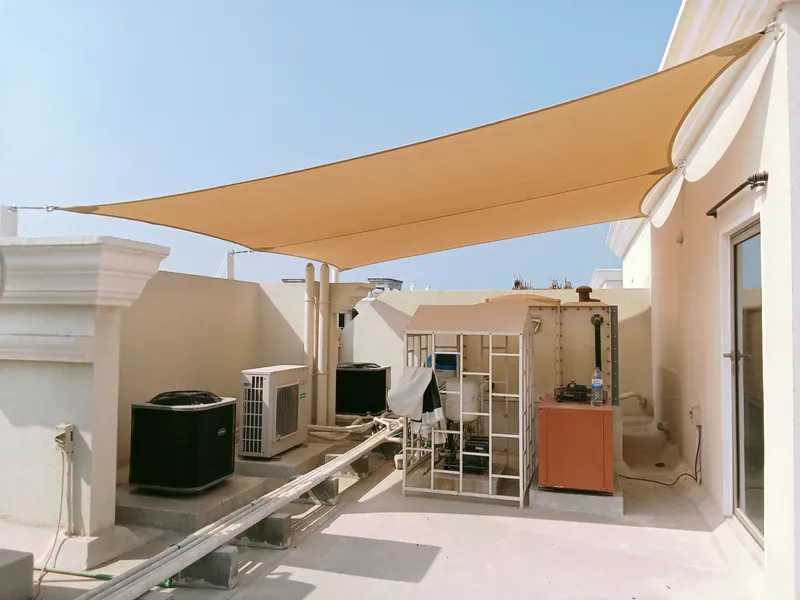 Dubai
Tensioned Shade Sail Installed in Dubai Rooftop Plant Area
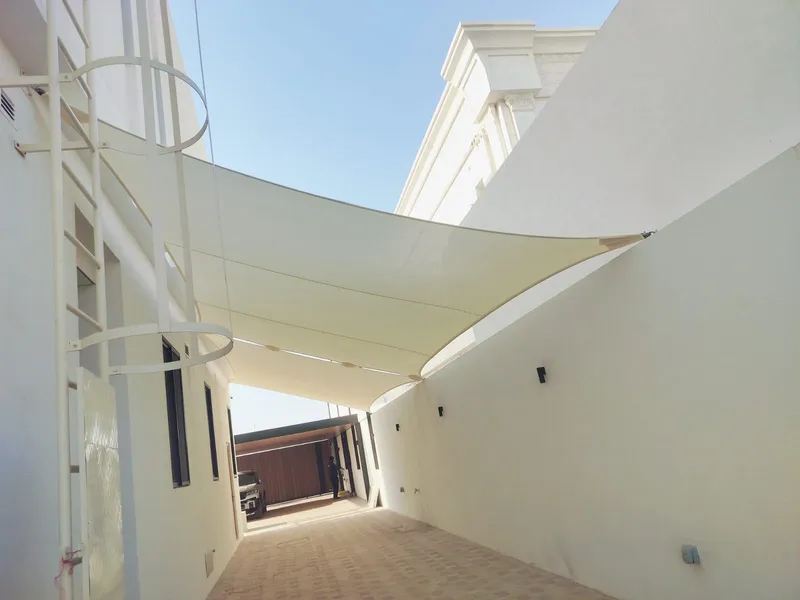 Dubai
Tensioned Shade Sail Installed in Dubai
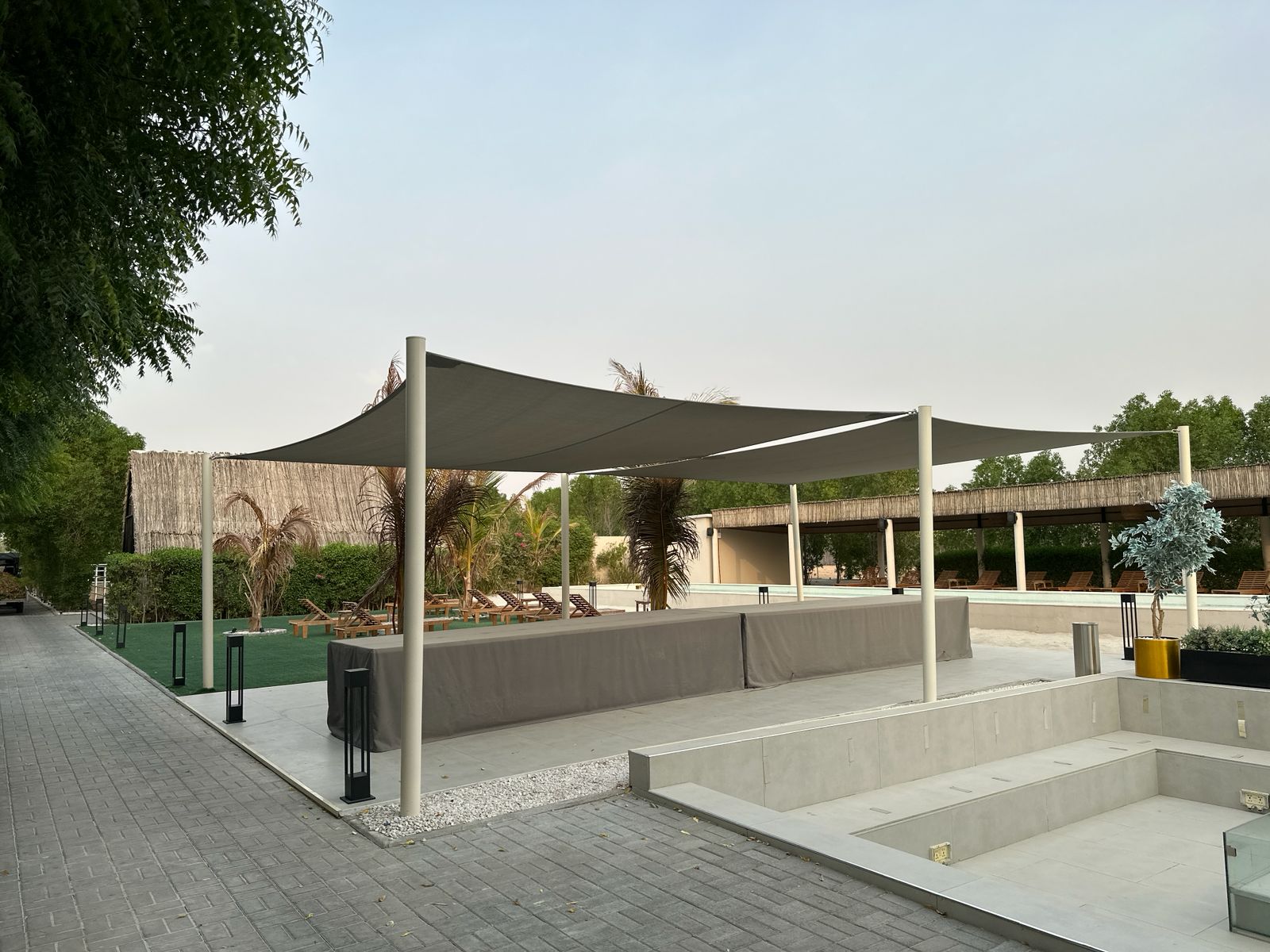 Dubai
Shade Sail Installed at a Private Residence
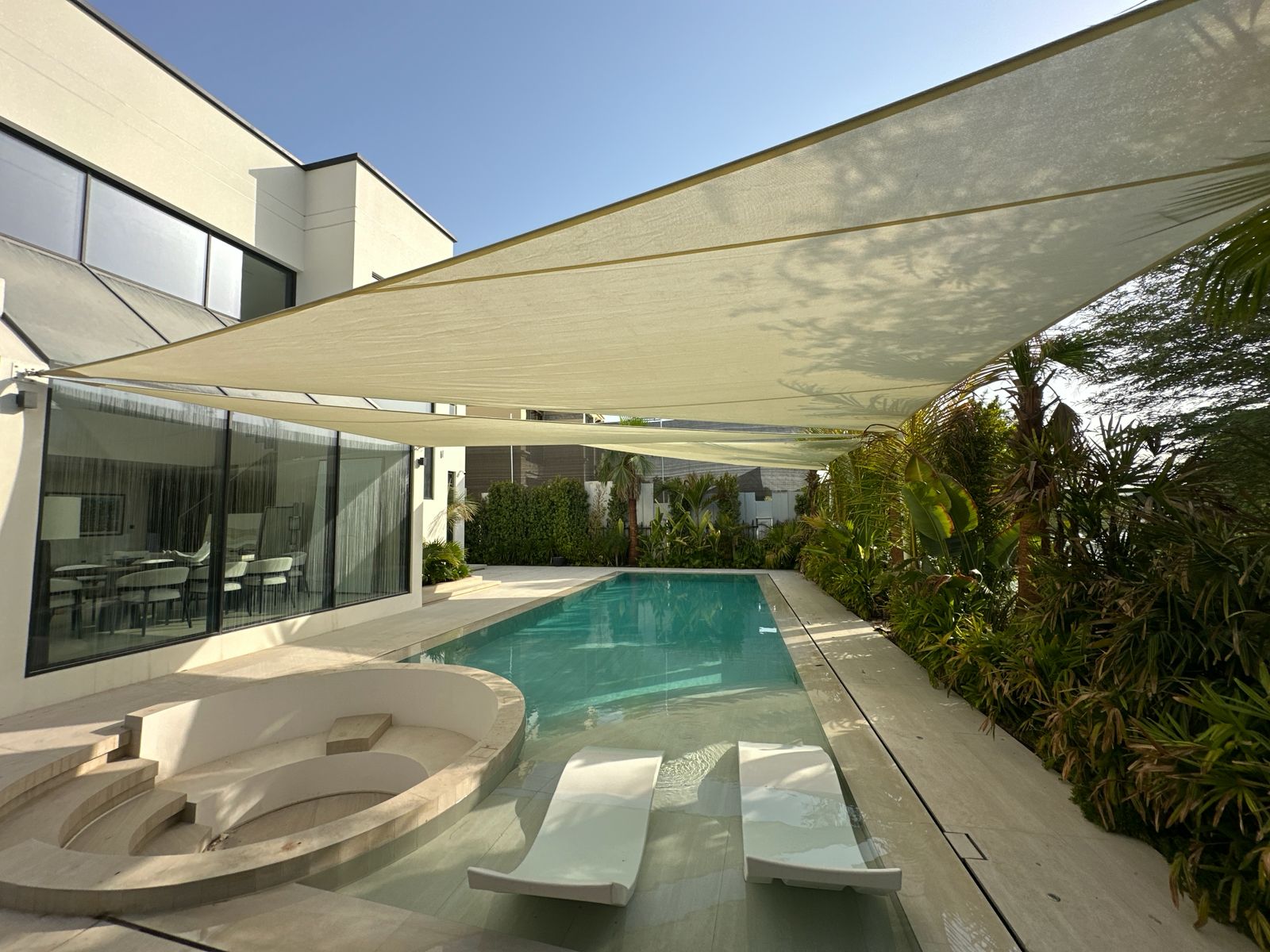 Jumeirah Islands, Dubai
Shade Sails installed in Jumeirah Islands
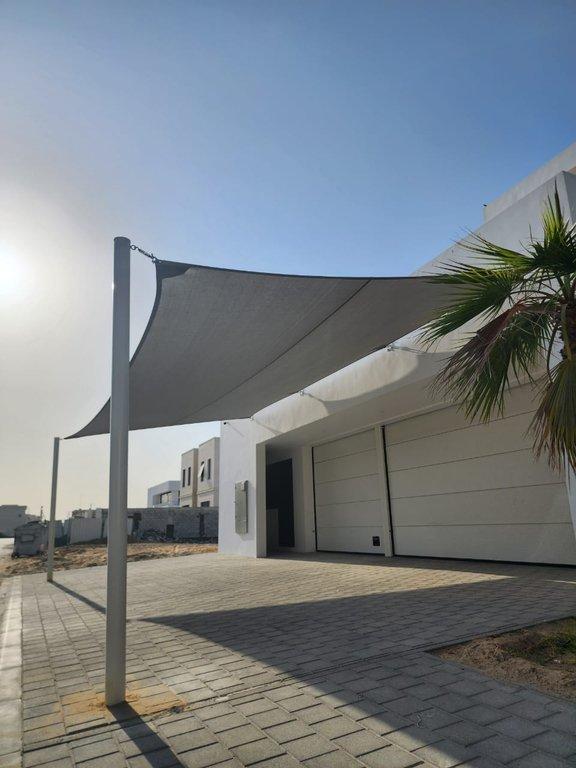 Al Khawaneej, Dubai
Tensioned Shade sail for Carport in Al Khawaneej
 Al Manara, Dubai
Double Shade Sail installed in Al Manara Dubai
 Dubai Hills, Dubai
Multiple Shade Sails with Posts for a customer in Dubai Hills
 The Lakes, Dubai
Shade Sail Installed in the Lakes
Get a quote for Shade Sail Designer
Tell us about your space and we'll recommend the right shade, with a price and installation date.